A landscape shaped by bulbs, estates, and spring light
History, horticulture, and a short season that returns each year with new color.
Table of Contents
From hunting grounds to ‘kitchen garden’

Long before Keukenhof became a springtime icon, the land around Lisse was woven into the life of a medieval estate. In the 15th century, this area formed part of the hunting grounds of the Countess Jacoba van Beieren (Jacqueline of Bavaria). Game moved through the woods, servants cut herbs and vegetables, and the estate kitchen depended on what could be gathered nearby. The name ‘Keukenhof’ itself — literally ‘kitchen garden’ — hints at these practical roots: this was land that fed people as much as it pleased the eye.
Over time, the estate changed hands, and the idea of a garden shifted from purely functional plots to landscapes designed for beauty, walking, and reflection. Yet the old story never quite disappeared. Even today, when you wander under tall trees or follow a curving path along the water, it’s not hard to imagine cooks collecting herbs centuries ago, or hunters returning through the same woods that now frame waves of tulips.
An English‑style park takes shape
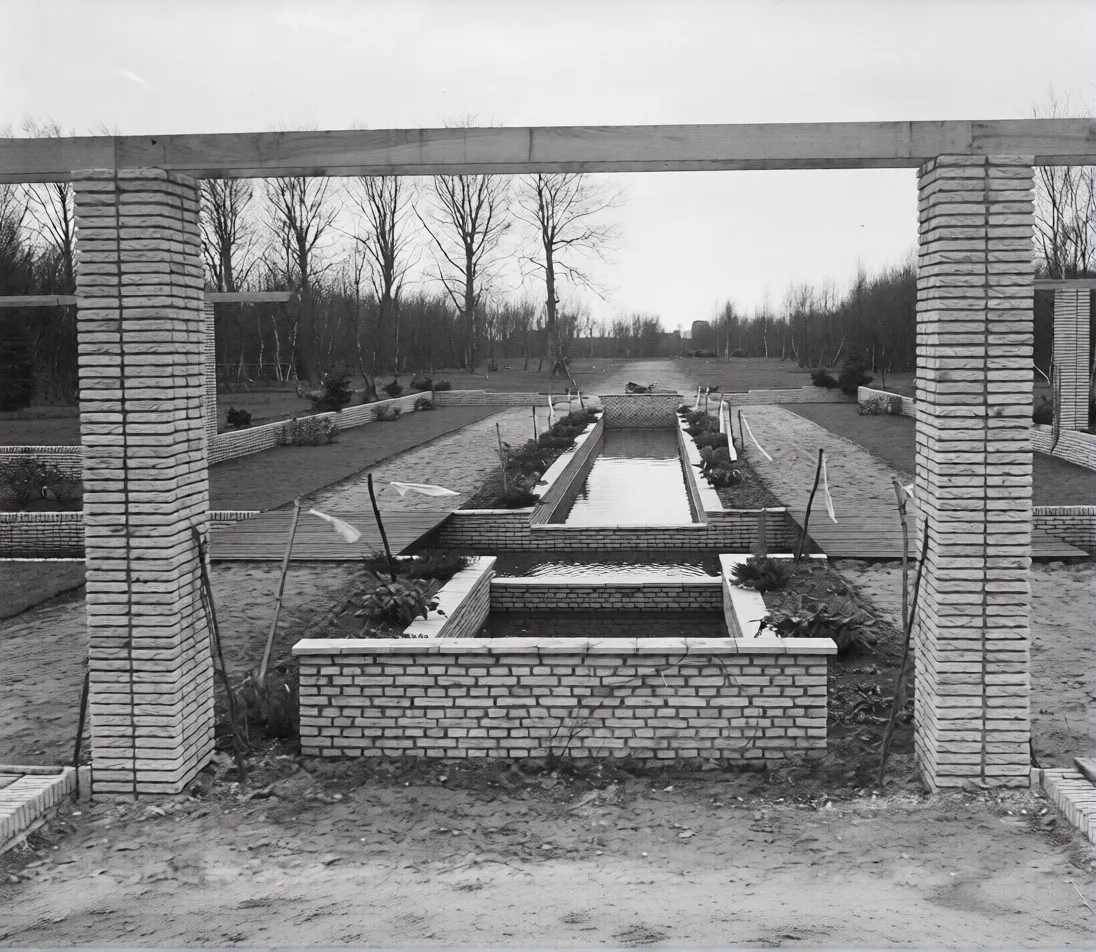
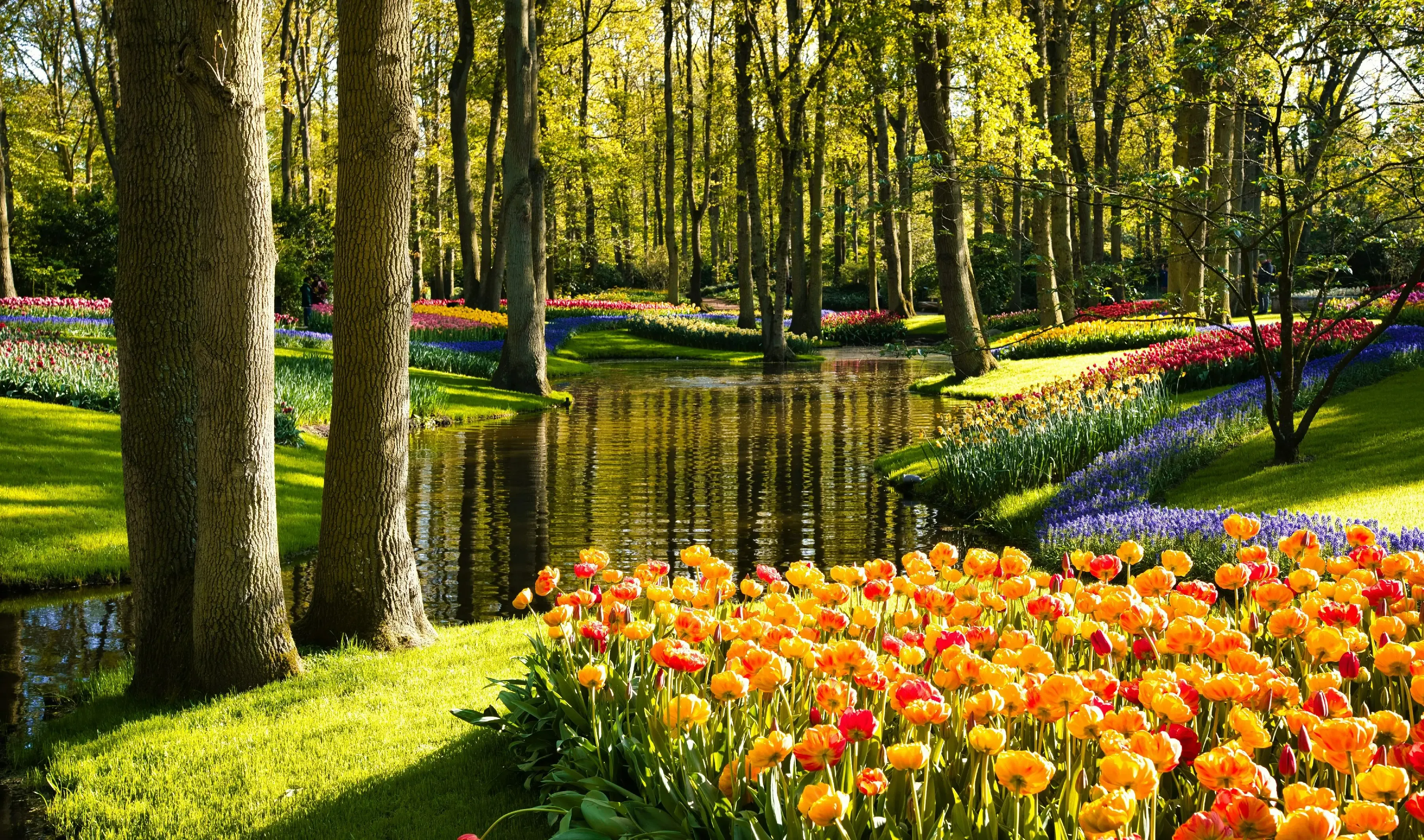
In the 19th century, a new owner commissioned the famous landscape architects Jan David Zocher and his son Louis Paul Zocher to reshape the estate into an English‑style park. Rather than rigid lines and formal parterres, they favored sweeping lawns, winding paths, and carefully placed trees that guided the eye and the feet. Lakes, gentle slopes, and groups of shrubs created the kind of ‘natural’ scenery that was, in fact, very deliberately composed.
The Zochers’ work laid the foundation for what visitors experience today. When you cross a small bridge to discover a fresh view of water and trees, or find a bench tucked into a curve of path, you’re feeling the echo of that 19th‑century vision. The later addition of millions of bulbs built on top of this structure, turning a private estate park into a public celebration of spring, but the bones of the landscape — its lines, rhythms, and quiet corners — still belong to the Zochers’ design.
The birth of a spring flower show
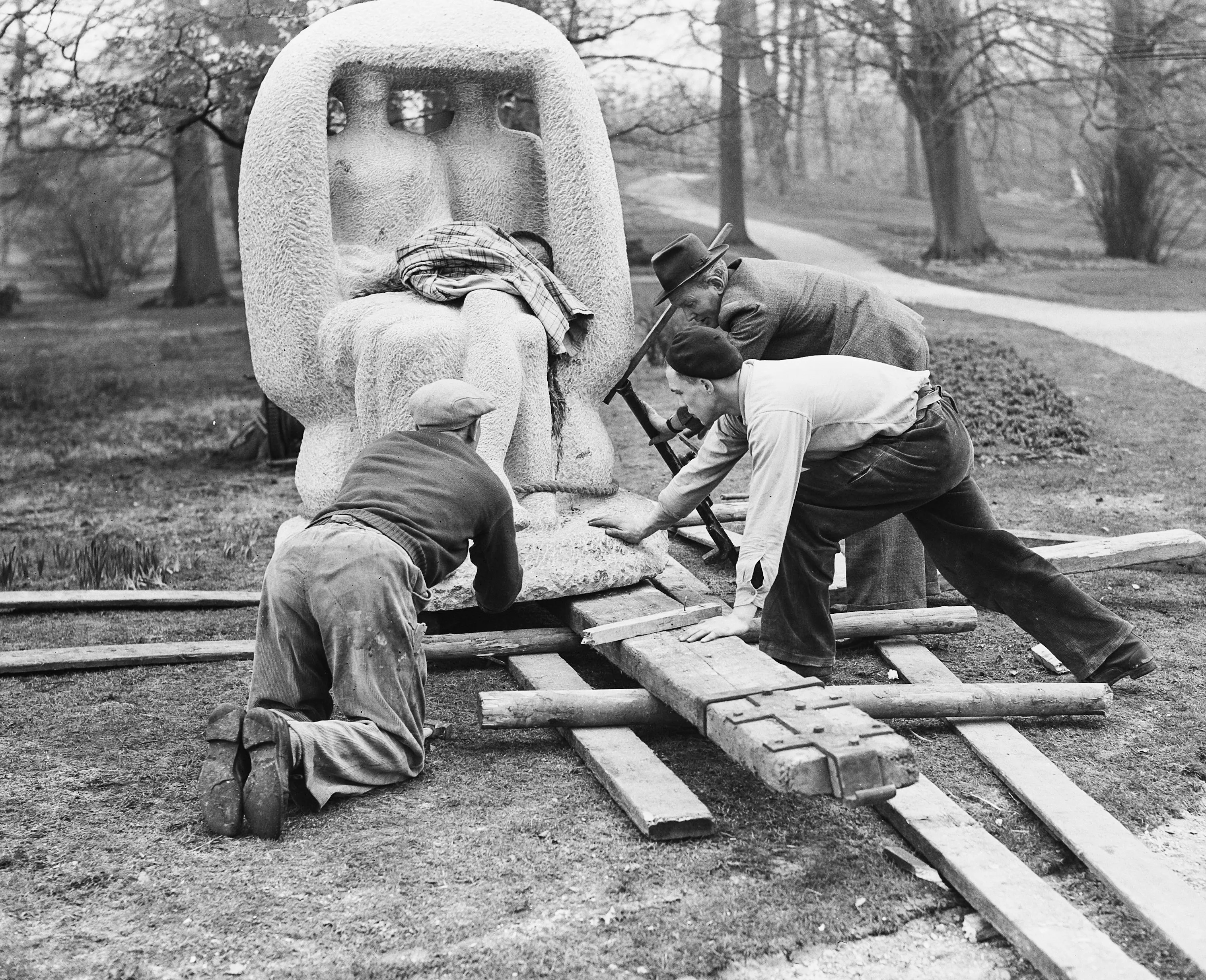
By the mid‑20th century, Dutch bulb growers were looking for a way to showcase their best varieties to the world. The sandy soils and cool climate of the region around Lisse had already made it a center of bulb cultivation, but fields alone could not fully tell the story of what was possible with tulips, daffodils, and hyacinths. In 1949, a group of growers and local figures chose the Keukenhof estate as the stage for a grand spring exposition — a place where bulbs could be shown not just in rows, but in richly designed beds and borders.
The first official Keukenhof flower exhibition opened in 1950. What began as a professional showcase quickly captured the public imagination. Visitors came from across the Netherlands and beyond, drawn by the idea of a park that belonged entirely to spring. Each year brought new combinations, new varieties, and new stories carried home in photographs, postcards, and memories. Over time, Keukenhof grew into one of the world’s best‑known seasonal gardens, yet it remained rooted in the relationship between growers, designers, and a landscape shaped by centuries of history.
Designing with bulbs: craft and creativity

Designing Keukenhof is a year‑round craft. Long after the gates close at the end of the season, gardeners and designers are already working on the next year’s plan. They choose themes, sketch new patterns, and decide where rivers of color will flow and where calmer, monochrome beds will invite slower looking. Bulbs are layered in the soil at different depths and bloom times, so one spot can evolve over weeks — early snowdrops and crocuses giving way to mid‑season tulips, then to late daffodils and alliums.
Behind each sweeping bed lies a careful balance of horticulture and storytelling. Designers think about how colors will look under soft spring light, how paths can guide crowds without feeling like queues, and how to create small surprises — a bench with a hidden view, a quiet corner of woodland planting, an unexpected contrast between tiny botanical tulips and bold modern hybrids. For visitors, the result feels effortless: a walk where every turn reveals something new, even if the work behind it has taken months of thought.
The bulb region beyond the gates
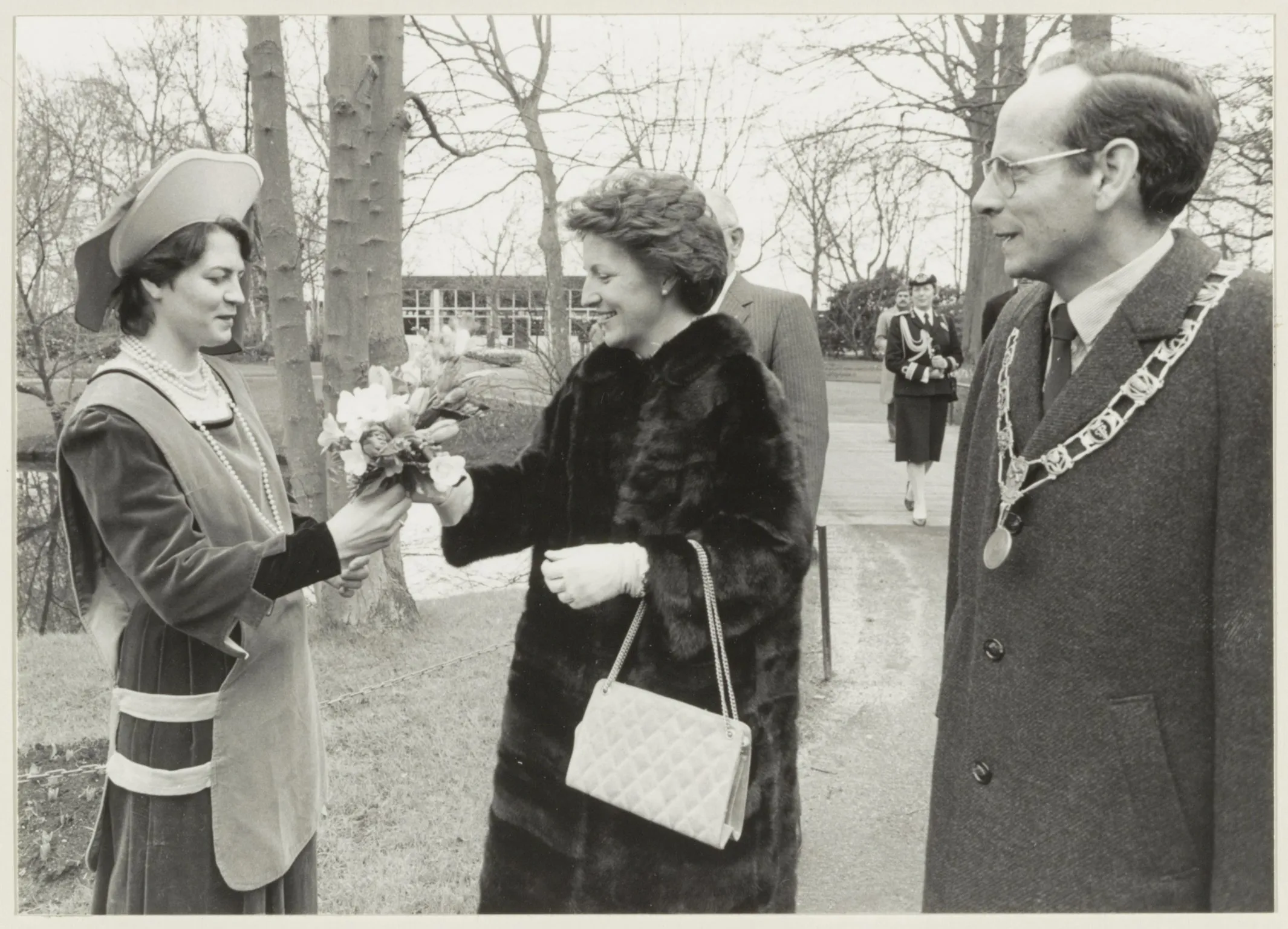
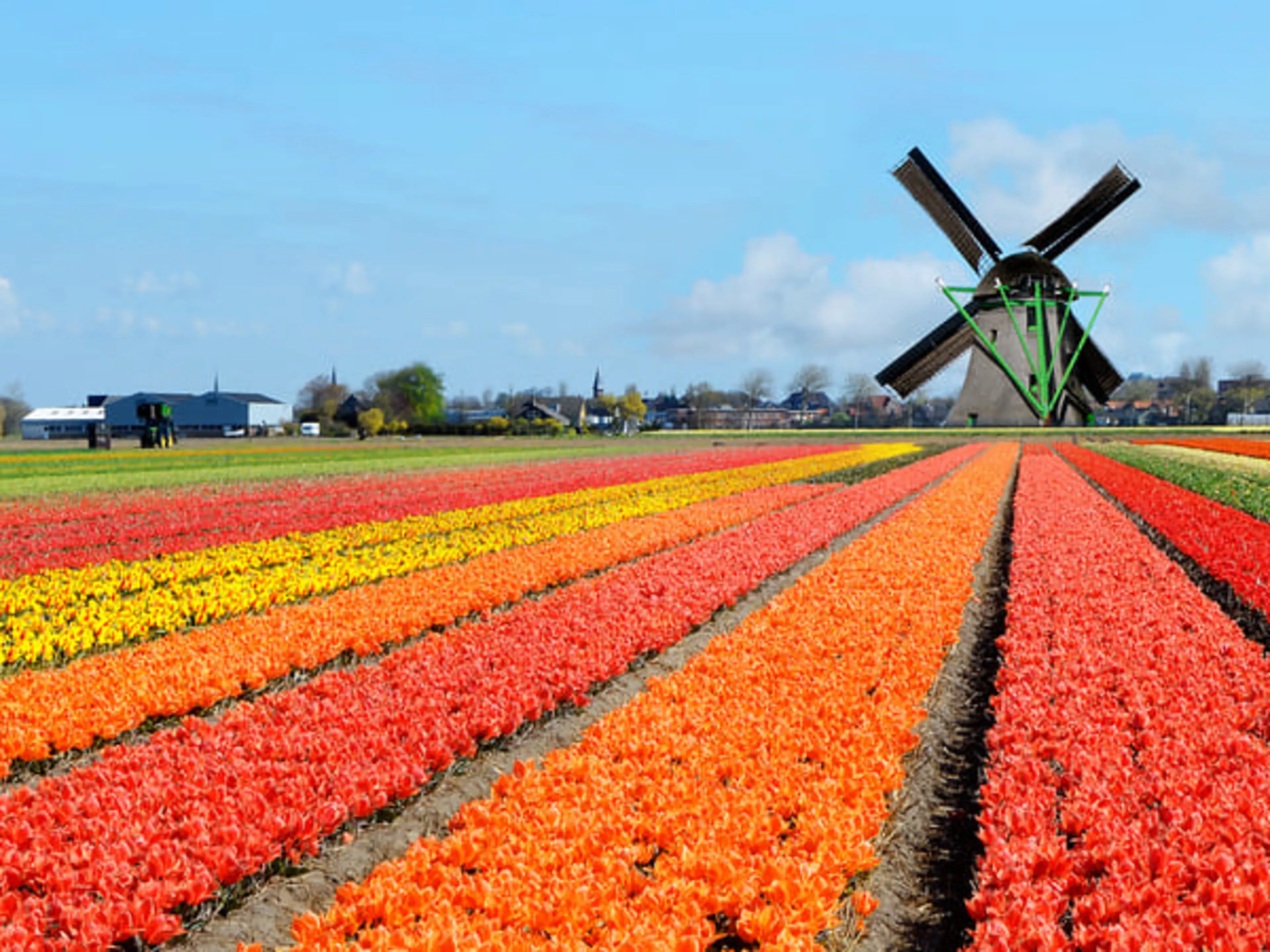
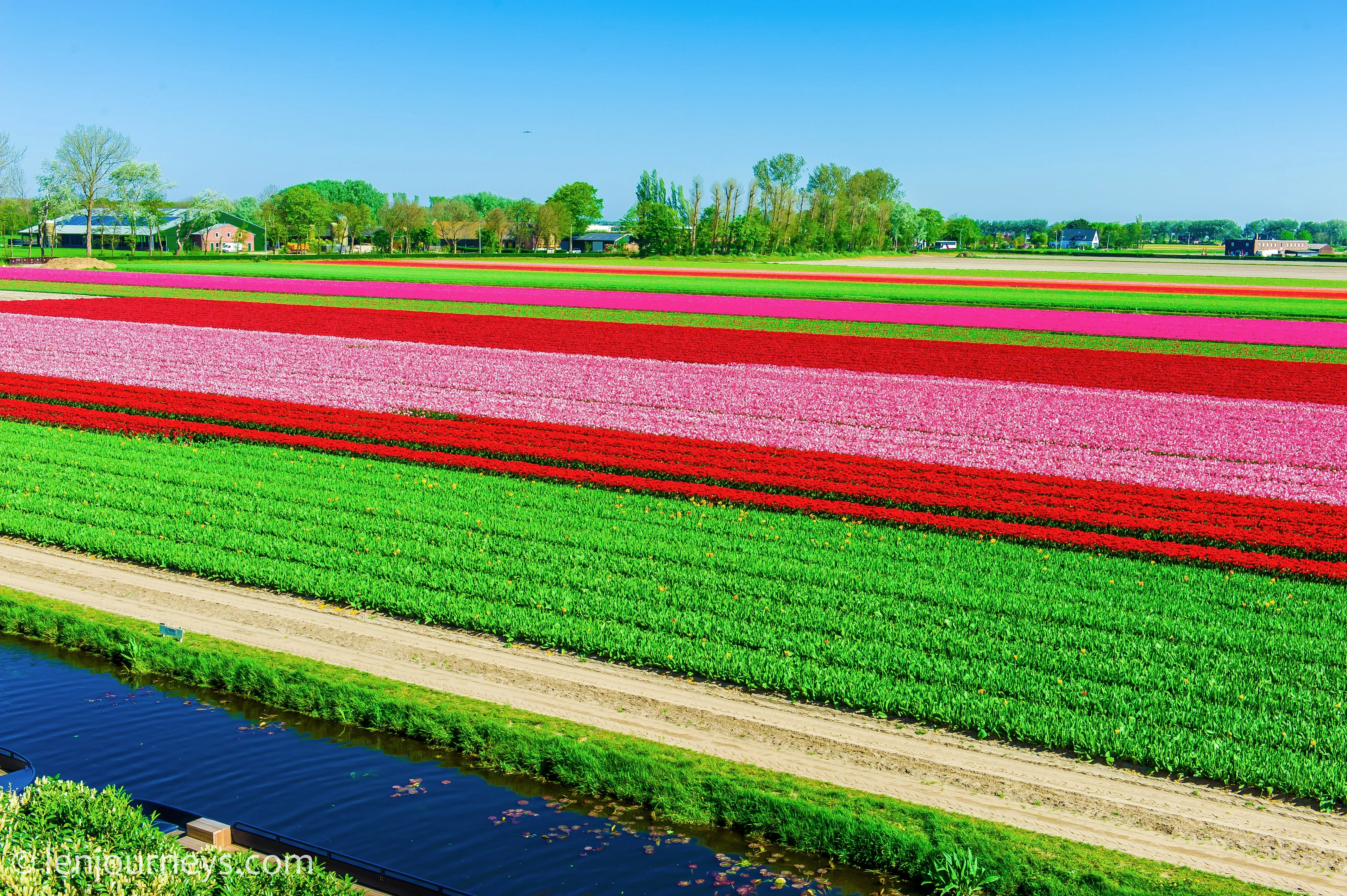
Keukenhof does not stand alone; it’s part of a wider landscape known as the Bollenstreek, or bulb region. For much of the year, the fields around Lisse, Hillegom, and Noordwijkerhout look modest — neat rows of plants or bare soil, machinery moving quietly between them. But in spring, those same fields erupt into stripes of color that mirror and extend the park’s displays, turning the wider countryside into a vast, open‑air painting.
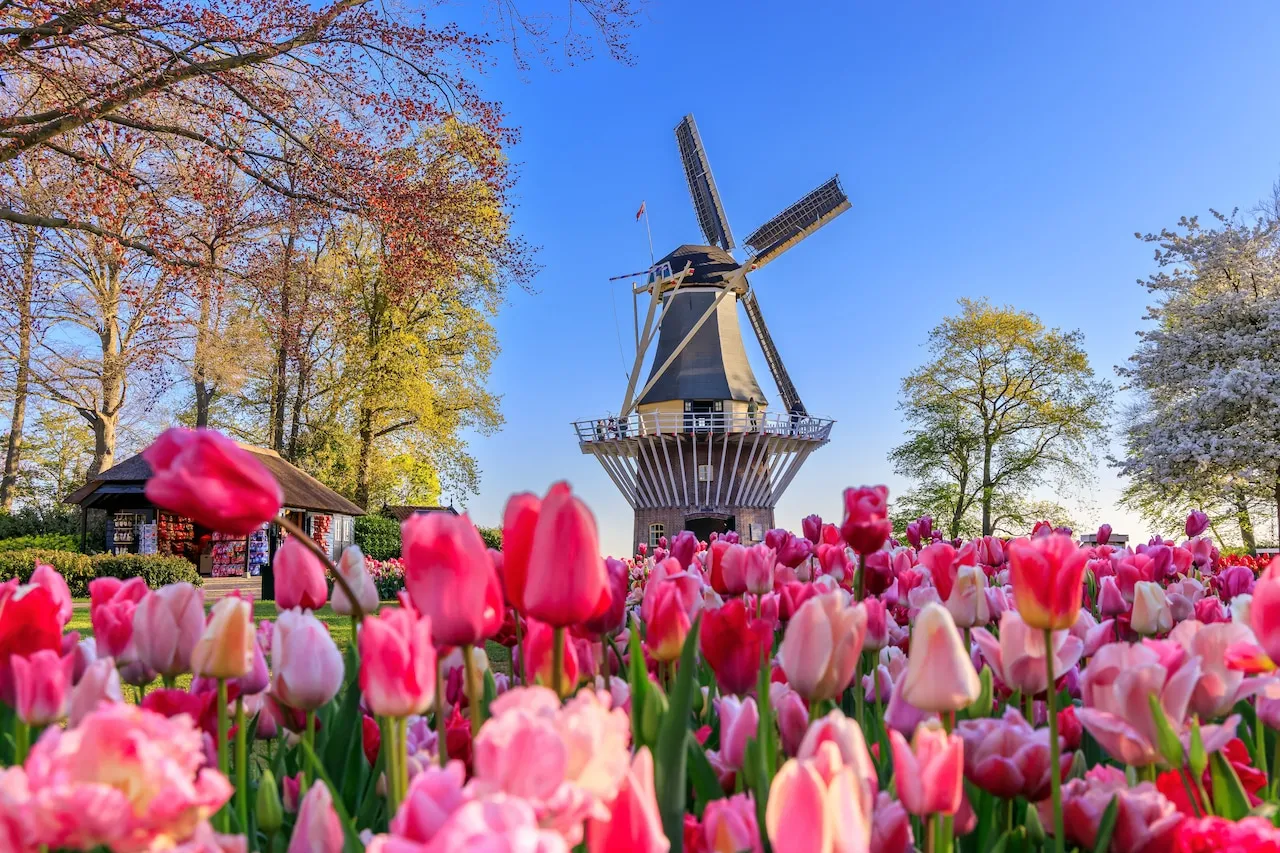
Many visitors combine a walk in Keukenhof with a bike ride or short drive past the surrounding fields. The view from the historic windmill hints at this larger tapestry: beyond the park’s carefully designed beds lies a working agricultural landscape where bulbs are grown, harvested, stored, and prepared for export. Together, the park and the fields tell a story about how beauty, labor, and commerce intertwine in this small, sandy stretch of the Netherlands.
Gardeners, growers, and behind‑the‑scenes work
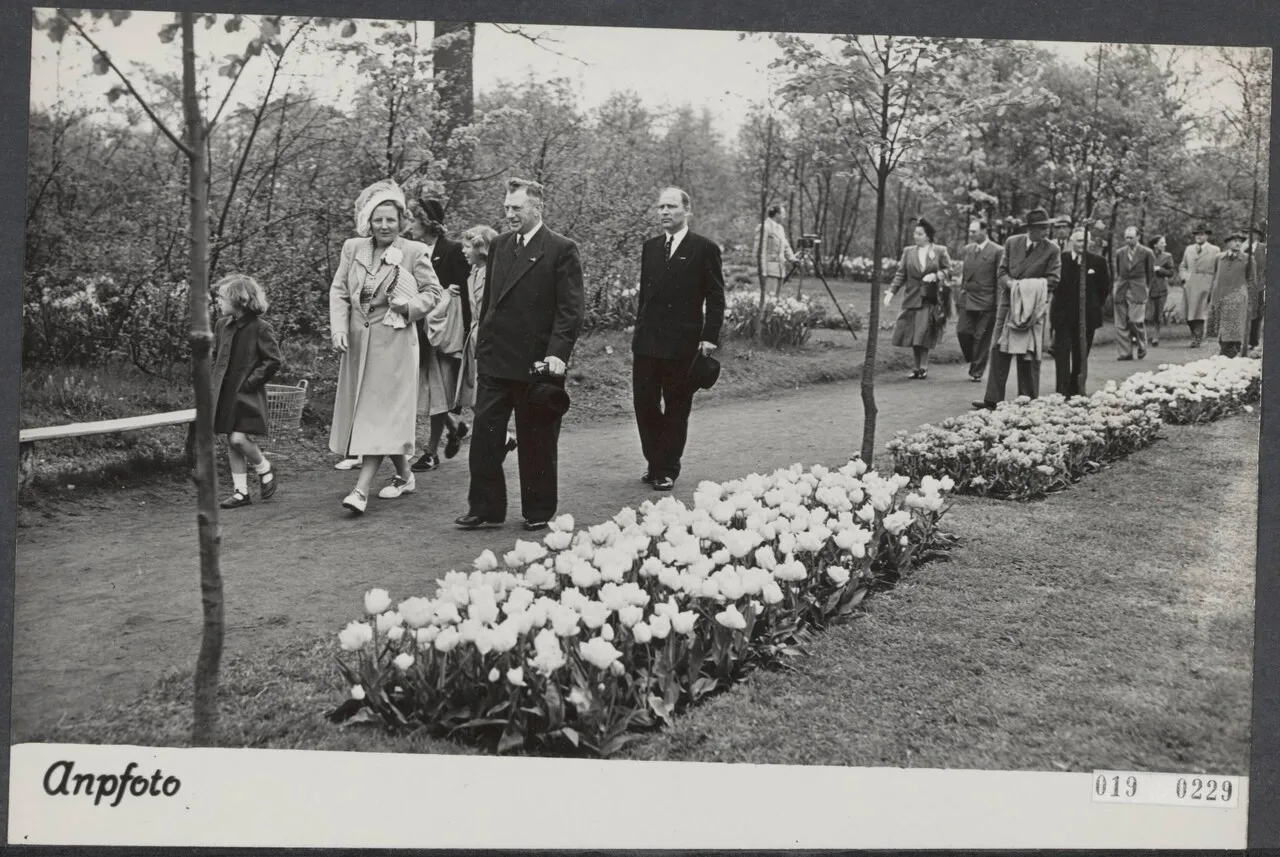
When visitors arrive in spring, much of the work that made Keukenhof possible is already hidden underground or folded into the rhythm of daily maintenance. Bulbs are planted in autumn by teams of gardeners who follow detailed plans, often layering two or three varieties in a single spot so that bloom carries on for weeks. Growers deliver carefully selected bulbs, each variety chosen for height, timing, color, and reliability.
During the open season, gardeners gently tidy beds, remove fading blooms, and keep paths clear and safe. Indoors, staff refresh pavilion displays and coordinate with growers to highlight special collections. It’s a choreography that blends long‑term planning with quick adjustments to weather and flowering patterns. The result, when it works — and it often does — is a park that feels both perfectly timed and surprisingly alive, responding to the real, changeable nature of spring rather than forcing it into a rigid schedule.
Pavilions, art, and changing themes
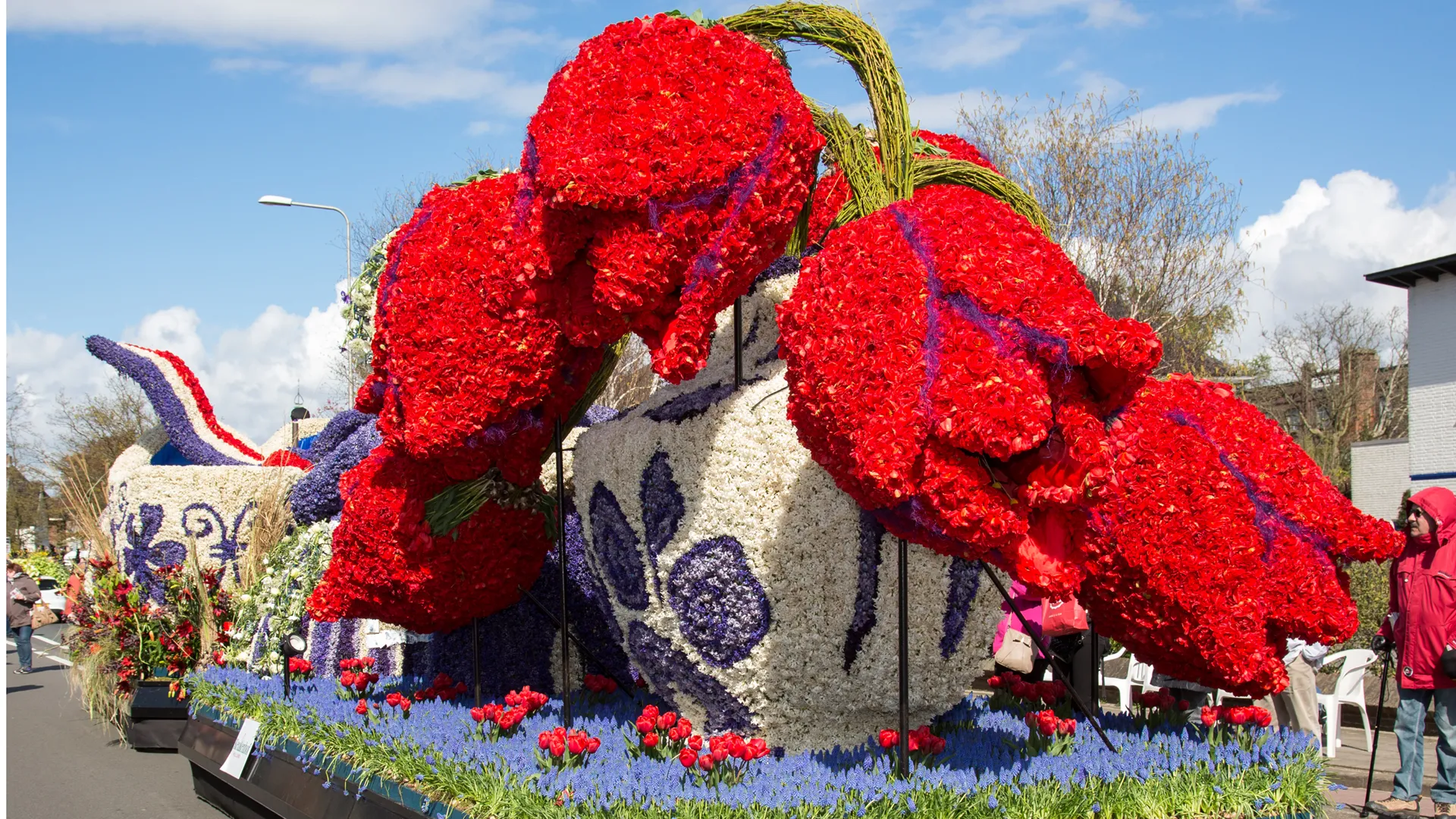
Alongside the outdoor gardens, Keukenhof’s pavilions provide spaces for more focused stories. One might host an orchid show of almost theatrical abundance, another a calm, minimal display that lets the form of a single tulip variety speak for itself. Themes change from year to year, sometimes highlighting a particular flower group, sometimes weaving in art, history, or cultural references.
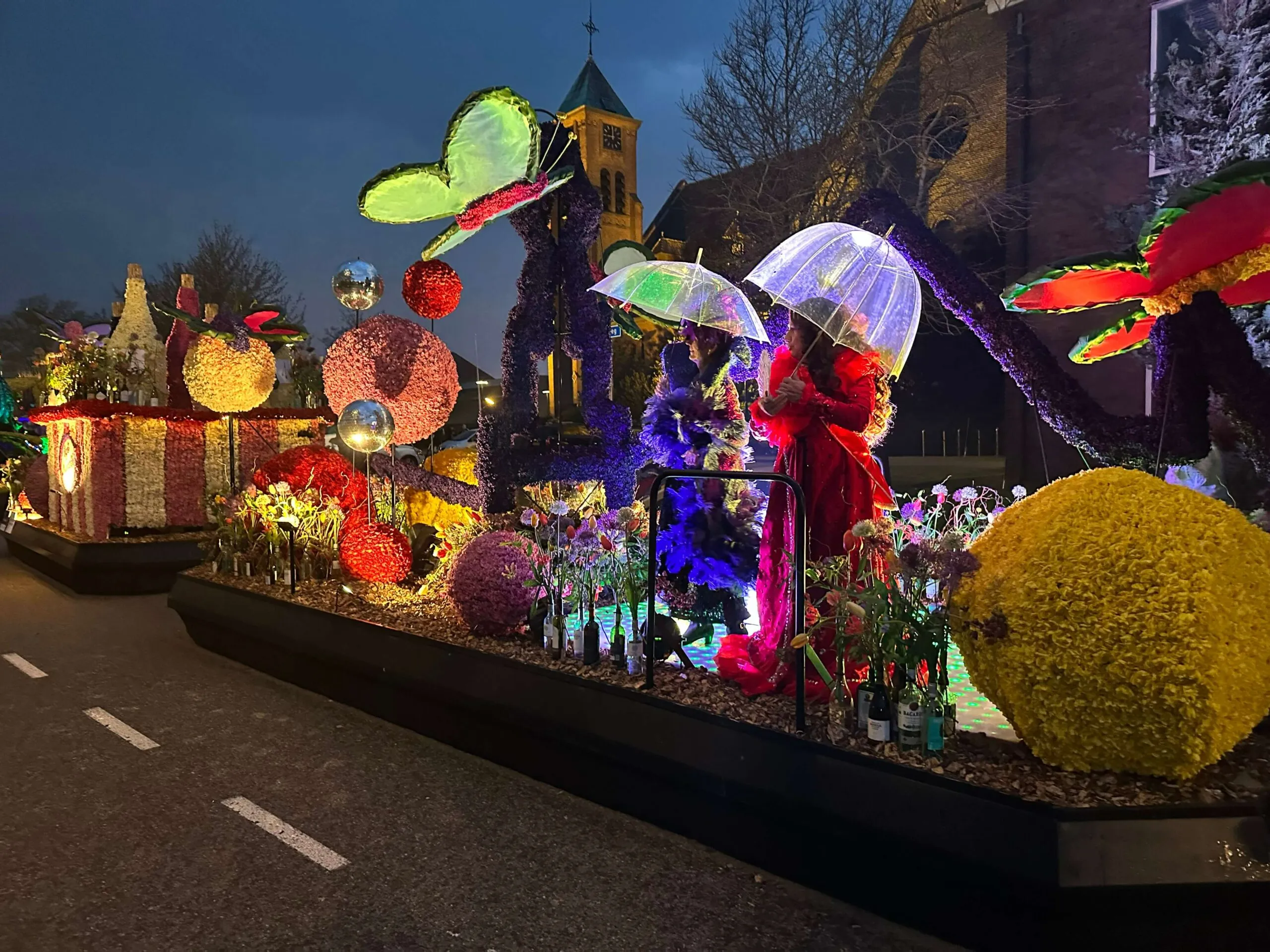
In recent years, the park has also placed more emphasis on sculpture and outdoor art, from playful pieces tucked into borders to more contemplative works set against trees and water. These additions don’t compete with the flowers; instead, they encourage visitors to look differently — to pause, to consider shape and line, to see how a bronze curve or wooden form can echo a leaf or stem. Together, pavilions and artworks remind us that Keukenhof is not just a place to ‘see tulips’, but a setting where plants, design, and imagination meet.
Sustainability, soil, and caring for the landscape
Beneath the color, Keukenhof is a living system of soil, water, trees, and bulbs that must be cared for if the park is to thrive year after year. Gardeners think about drainage and root health, about how to protect old trees while still refreshing nearby plantings, and about which bulbs can be lifted and reused and which are best replaced. Sustainable practices, such as careful water management, integrated pest strategies, and mindful use of materials, increasingly guide decisions.
Visitors, too, play a quiet role in this care. Staying on paths preserves the structure of beds and prevents compaction, while respecting signs and temporary barriers allows gardeners to protect delicate areas. When we treat Keukenhof as a shared landscape rather than a backdrop, we help ensure that future springs can be just as lush and generous.
Keukenhof in Dutch culture and travel
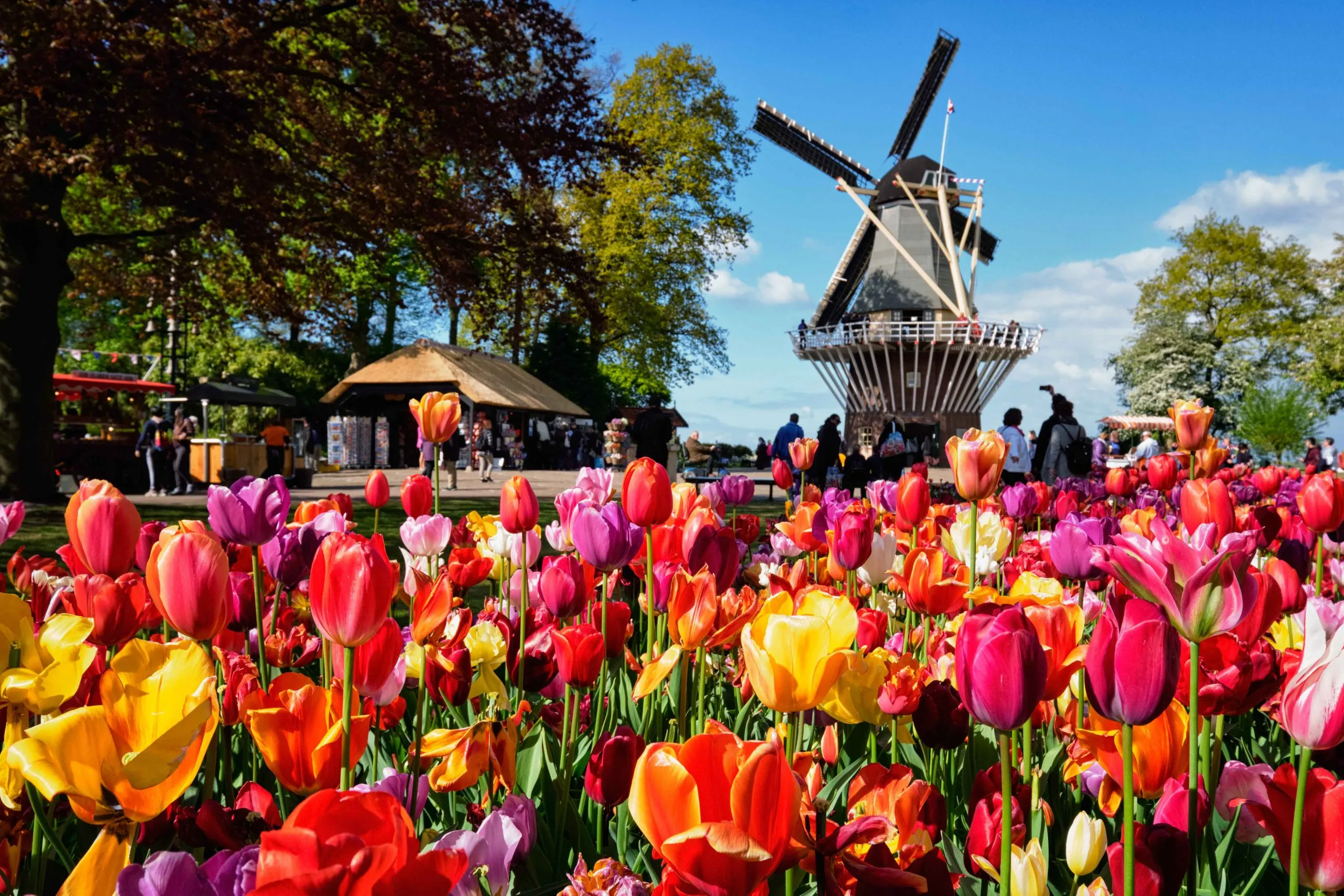
Over the decades, Keukenhof has become one of the Netherlands’ most recognizable spring images. For many, it’s a first introduction to the country beyond canals and city streets — a glimpse of the sandy soils, coastal light, and agricultural skill that underpin the bulb trade. School groups, families, and international travelers all move through the same gates, layering personal memories onto a place that’s also deeply woven into the Dutch story about water, land, and cultivation.
At the same time, Keukenhof is part of a wider travel rhythm. Some visitors come for a once‑in‑a‑lifetime trip that coincides with milestone birthdays or anniversaries; others return often, noticing how themes change, how trees grow, how new varieties arrive. For locals, it can be a seasonal marker: a cue that winter has truly loosened its hold and that longer, lighter days are on their way.
Planning your visit: seasons, crowds, and calm moments
Because Keukenhof is open for only a few weeks, timing matters. Early in the season, indoor displays and early bulbs lead the way while surrounding fields are still waking up. Mid‑season often offers the fullest mix of indoor and outdoor color, though it also draws more visitors. Late in the season can bring warmer days, blossoming trees, and different color harmonies as later tulips and other plants take center stage.
Wherever you land within that window, you can still shape a calm visit. Selecting weekday mornings or late afternoons, taking pauses in quieter corners, and letting go of the urge to see everything in one loop can transform a busy day into a more personal experience. Spring weather in the Netherlands is famously changeable, but a light rain can soften crowds and turn reflections in puddles and ponds into their own, quieter spectacle.
Accessibility, families, and easy routes
Keukenhof is designed with accessibility in mind. Broad, mostly level paths, ramps, and accessible restrooms help visitors with wheelchairs, mobility aids, or strollers move comfortably through the park. Renting a wheelchair in advance, if needed, can take the pressure off long walking distances, and benches are scattered generously for regular rests.
Families often find Keukenhof an easy day out: children can explore play areas, follow simple flower ‘treasure hunts’, and enjoy open lawns, while adults appreciate the balance of activity and calm. Whether you walk the full network of paths or choose a shorter, circular route, the park’s layout allows you to adapt the experience to your energy, time, and comfort level.
Lisse, the Bollenstreek, and nearby towns
Beyond the garden gates lies Lisse, a small town whose identity is closely tied to bulbs and fields. Nearby villages and coastal towns — from Noordwijk and Katwijk by the sea to Hillegom and Voorhout inland — form part of the Bollenstreek, each with its own markets, cafés, and walking routes. Exploring a little beyond Keukenhof can reveal quieter views of fields, waterways, and traditional farmhouses.
Many visitors pair Keukenhof with time in Leiden, Haarlem, or The Hague, all reachable by train and bus. Leiden’s canals and university atmosphere, Haarlem’s historic center and museums, and The Hague’s mix of institutions and seaside charm make the region feel richer than a single day trip. Keukenhof may be the bright highlight, but it sits within a wider map that rewards curiosity and a slightly slower pace.
Why Keukenhof still feels special
Part of Keukenhof’s magic is its simplicity: a place where, for a few weeks each year, flowers are unapologetically the main event. In a world that often prizes speed and multitasking, the park invites you to do something quietly radical — to walk slowly, to notice how many shades of yellow exist in a single bed, to stand still while a breeze moves through trees and tulips alike.
Table of Contents
From hunting grounds to ‘kitchen garden’
Long before Keukenhof became a springtime icon, the land around Lisse was woven into the life of a medieval estate. In the 15th century, this area formed part of the hunting grounds of the Countess Jacoba van Beieren (Jacqueline of Bavaria). Game moved through the woods, servants cut herbs and vegetables, and the estate kitchen depended on what could be gathered nearby. The name ‘Keukenhof’ itself — literally ‘kitchen garden’ — hints at these practical roots: this was land that fed people as much as it pleased the eye.
Over time, the estate changed hands, and the idea of a garden shifted from purely functional plots to landscapes designed for beauty, walking, and reflection. Yet the old story never quite disappeared. Even today, when you wander under tall trees or follow a curving path along the water, it’s not hard to imagine cooks collecting herbs centuries ago, or hunters returning through the same woods that now frame waves of tulips.
An English‑style park takes shape
In the 19th century, a new owner commissioned the famous landscape architects Jan David Zocher and his son Louis Paul Zocher to reshape the estate into an English‑style park. Rather than rigid lines and formal parterres, they favored sweeping lawns, winding paths, and carefully placed trees that guided the eye and the feet. Lakes, gentle slopes, and groups of shrubs created the kind of ‘natural’ scenery that was, in fact, very deliberately composed.
The Zochers’ work laid the foundation for what visitors experience today. When you cross a small bridge to discover a fresh view of water and trees, or find a bench tucked into a curve of path, you’re feeling the echo of that 19th‑century vision. The later addition of millions of bulbs built on top of this structure, turning a private estate park into a public celebration of spring, but the bones of the landscape — its lines, rhythms, and quiet corners — still belong to the Zochers’ design.
The birth of a spring flower show
By the mid‑20th century, Dutch bulb growers were looking for a way to showcase their best varieties to the world. The sandy soils and cool climate of the region around Lisse had already made it a center of bulb cultivation, but fields alone could not fully tell the story of what was possible with tulips, daffodils, and hyacinths. In 1949, a group of growers and local figures chose the Keukenhof estate as the stage for a grand spring exposition — a place where bulbs could be shown not just in rows, but in richly designed beds and borders.
The first official Keukenhof flower exhibition opened in 1950. What began as a professional showcase quickly captured the public imagination. Visitors came from across the Netherlands and beyond, drawn by the idea of a park that belonged entirely to spring. Each year brought new combinations, new varieties, and new stories carried home in photographs, postcards, and memories. Over time, Keukenhof grew into one of the world’s best‑known seasonal gardens, yet it remained rooted in the relationship between growers, designers, and a landscape shaped by centuries of history.
Designing with bulbs: craft and creativity
Designing Keukenhof is a year‑round craft. Long after the gates close at the end of the season, gardeners and designers are already working on the next year’s plan. They choose themes, sketch new patterns, and decide where rivers of color will flow and where calmer, monochrome beds will invite slower looking. Bulbs are layered in the soil at different depths and bloom times, so one spot can evolve over weeks — early snowdrops and crocuses giving way to mid‑season tulips, then to late daffodils and alliums.
Behind each sweeping bed lies a careful balance of horticulture and storytelling. Designers think about how colors will look under soft spring light, how paths can guide crowds without feeling like queues, and how to create small surprises — a bench with a hidden view, a quiet corner of woodland planting, an unexpected contrast between tiny botanical tulips and bold modern hybrids. For visitors, the result feels effortless: a walk where every turn reveals something new, even if the work behind it has taken months of thought.
The bulb region beyond the gates
Keukenhof does not stand alone; it’s part of a wider landscape known as the Bollenstreek, or bulb region. For much of the year, the fields around Lisse, Hillegom, and Noordwijkerhout look modest — neat rows of plants or bare soil, machinery moving quietly between them. But in spring, those same fields erupt into stripes of color that mirror and extend the park’s displays, turning the wider countryside into a vast, open‑air painting.
Many visitors combine a walk in Keukenhof with a bike ride or short drive past the surrounding fields. The view from the historic windmill hints at this larger tapestry: beyond the park’s carefully designed beds lies a working agricultural landscape where bulbs are grown, harvested, stored, and prepared for export. Together, the park and the fields tell a story about how beauty, labor, and commerce intertwine in this small, sandy stretch of the Netherlands.
Gardeners, growers, and behind‑the‑scenes work
When visitors arrive in spring, much of the work that made Keukenhof possible is already hidden underground or folded into the rhythm of daily maintenance. Bulbs are planted in autumn by teams of gardeners who follow detailed plans, often layering two or three varieties in a single spot so that bloom carries on for weeks. Growers deliver carefully selected bulbs, each variety chosen for height, timing, color, and reliability.
During the open season, gardeners gently tidy beds, remove fading blooms, and keep paths clear and safe. Indoors, staff refresh pavilion displays and coordinate with growers to highlight special collections. It’s a choreography that blends long‑term planning with quick adjustments to weather and flowering patterns. The result, when it works — and it often does — is a park that feels both perfectly timed and surprisingly alive, responding to the real, changeable nature of spring rather than forcing it into a rigid schedule.
Pavilions, art, and changing themes
Alongside the outdoor gardens, Keukenhof’s pavilions provide spaces for more focused stories. One might host an orchid show of almost theatrical abundance, another a calm, minimal display that lets the form of a single tulip variety speak for itself. Themes change from year to year, sometimes highlighting a particular flower group, sometimes weaving in art, history, or cultural references.
In recent years, the park has also placed more emphasis on sculpture and outdoor art, from playful pieces tucked into borders to more contemplative works set against trees and water. These additions don’t compete with the flowers; instead, they encourage visitors to look differently — to pause, to consider shape and line, to see how a bronze curve or wooden form can echo a leaf or stem. Together, pavilions and artworks remind us that Keukenhof is not just a place to ‘see tulips’, but a setting where plants, design, and imagination meet.
Sustainability, soil, and caring for the landscape
Beneath the color, Keukenhof is a living system of soil, water, trees, and bulbs that must be cared for if the park is to thrive year after year. Gardeners think about drainage and root health, about how to protect old trees while still refreshing nearby plantings, and about which bulbs can be lifted and reused and which are best replaced. Sustainable practices, such as careful water management, integrated pest strategies, and mindful use of materials, increasingly guide decisions.
Visitors, too, play a quiet role in this care. Staying on paths preserves the structure of beds and prevents compaction, while respecting signs and temporary barriers allows gardeners to protect delicate areas. When we treat Keukenhof as a shared landscape rather than a backdrop, we help ensure that future springs can be just as lush and generous.
Keukenhof in Dutch culture and travel
Over the decades, Keukenhof has become one of the Netherlands’ most recognizable spring images. For many, it’s a first introduction to the country beyond canals and city streets — a glimpse of the sandy soils, coastal light, and agricultural skill that underpin the bulb trade. School groups, families, and international travelers all move through the same gates, layering personal memories onto a place that’s also deeply woven into the Dutch story about water, land, and cultivation.
At the same time, Keukenhof is part of a wider travel rhythm. Some visitors come for a once‑in‑a‑lifetime trip that coincides with milestone birthdays or anniversaries; others return often, noticing how themes change, how trees grow, how new varieties arrive. For locals, it can be a seasonal marker: a cue that winter has truly loosened its hold and that longer, lighter days are on their way.
Planning your visit: seasons, crowds, and calm moments
Because Keukenhof is open for only a few weeks, timing matters. Early in the season, indoor displays and early bulbs lead the way while surrounding fields are still waking up. Mid‑season often offers the fullest mix of indoor and outdoor color, though it also draws more visitors. Late in the season can bring warmer days, blossoming trees, and different color harmonies as later tulips and other plants take center stage.
Wherever you land within that window, you can still shape a calm visit. Selecting weekday mornings or late afternoons, taking pauses in quieter corners, and letting go of the urge to see everything in one loop can transform a busy day into a more personal experience. Spring weather in the Netherlands is famously changeable, but a light rain can soften crowds and turn reflections in puddles and ponds into their own, quieter spectacle.
Accessibility, families, and easy routes
Keukenhof is designed with accessibility in mind. Broad, mostly level paths, ramps, and accessible restrooms help visitors with wheelchairs, mobility aids, or strollers move comfortably through the park. Renting a wheelchair in advance, if needed, can take the pressure off long walking distances, and benches are scattered generously for regular rests.
Families often find Keukenhof an easy day out: children can explore play areas, follow simple flower ‘treasure hunts’, and enjoy open lawns, while adults appreciate the balance of activity and calm. Whether you walk the full network of paths or choose a shorter, circular route, the park’s layout allows you to adapt the experience to your energy, time, and comfort level.
Lisse, the Bollenstreek, and nearby towns
Beyond the garden gates lies Lisse, a small town whose identity is closely tied to bulbs and fields. Nearby villages and coastal towns — from Noordwijk and Katwijk by the sea to Hillegom and Voorhout inland — form part of the Bollenstreek, each with its own markets, cafés, and walking routes. Exploring a little beyond Keukenhof can reveal quieter views of fields, waterways, and traditional farmhouses.
Many visitors pair Keukenhof with time in Leiden, Haarlem, or The Hague, all reachable by train and bus. Leiden’s canals and university atmosphere, Haarlem’s historic center and museums, and The Hague’s mix of institutions and seaside charm make the region feel richer than a single day trip. Keukenhof may be the bright highlight, but it sits within a wider map that rewards curiosity and a slightly slower pace.
Why Keukenhof still feels special
Part of Keukenhof’s magic is its simplicity: a place where, for a few weeks each year, flowers are unapologetically the main event. In a world that often prizes speed and multitasking, the park invites you to do something quietly radical — to walk slowly, to notice how many shades of yellow exist in a single bed, to stand still while a breeze moves through trees and tulips alike.